Making Pensacola America’s First Early Learning City
SCI’s Building Brains Program is all about giving every child the opportunity to be the best they can be, and moving the needle on kindergarten readiness.
Research shows that around 85 percent of the brain is developed in the first three years of life, and the amount of positive language interaction a child gets in that critical stretch is the key to unlocking their potential. Working with experts, SCI has developed programs to inform, equip, and support parents on the pivotal importance of early brain development.
Our goal is to make our community America’s First Early Learning City, in which all parts of the community work as one to make sure every child has the best chance to succeed at school and life. You can help us build a brain, build a life, build a community!
Watch this video to understand the WHY behind SCI’s Building Brains program!


Watch these videos to see SCI’s early brain development efforts in action!
Our Investment In Early Learning
SCI works to teach parents the importance of talk and interaction in fueling healthy brain development in the first three years of a child’s life. We work with community partners to connect with parents in three areas: in healthcare, in person, and in the community.
In Healthcare
Every year in our community, nearly 5,400 babies are born across four hospitals. That’s 5,400 chances to reach and teach parents about the importance of early brain development.
Brain Bags
SCI created a program to reach parents with a video lesson and a toolkit called a Brain Bag. The video lesson is based on a two-year research collaboration between SCI and the University of Chicago’s TMW Center for Early Learning and Public Health. That research shows video is an effective tool to change what parents know about how they can influence a child’s early brain development — and how that influence builds the foundation for school readiness at age 5.
The Brain Bag was launched by a grant from IMPACT 100 Pensacola Bay Area in spring 2017. More than 18,500 have been given out at Baptist, Sacred Heart, Santa Rosa Medical, and West Florida hospitals since the project began.
The Brain Bags are stored, assembled, and delivered by The Arc Gateway’s Pollak Industries, which offers life- and work-skills training for adults with developmental disabilities.
The Brain Bag survey asks moms two questions: On a scale of 1-10, rate your knowledge of how parent talk influences early brain development before the Brain Bag, and then rate it after. Overall our parents say their knowledge started at 7.6 and increases to a 9.7 after the lesson.

Basics Pensacola
SCI is a partner with The Basics Learning Network, a collaborative network founded by Dr. Ron Ferguson, an economist at Harvard University. It includes video lessons, toolkits, and Basics Insights, a weekly texting service that sends advice, tips and support straight to a parent or caregiver’s phone. Research shows the texts change the way parents interact with their children and encourage them to use The Basics of brain building more often.
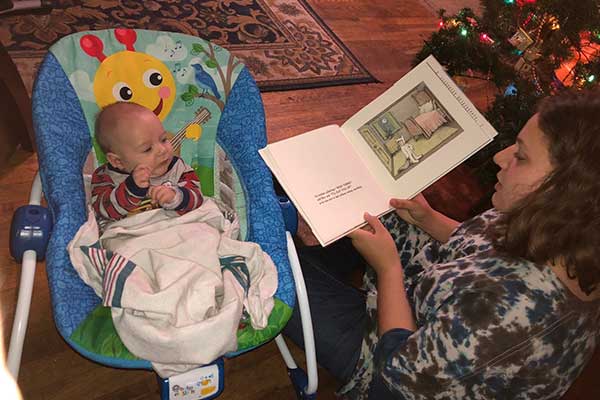
In Person
Sibling Brain Builders
Launched in Escambia County elementary and middle schools in 2019, this program uses the sibling dynamic boost literacy and language exposure.
At Bellview Middle School, students with siblings ages 0 to 5 will take home lessons, worksheets and books to share and use with their younger brothers and sisters at home. The learning environment promotes brain building in babies and strengths older students’ skills.
At Montclair, Weis, OJ Semmes and Lincoln Park elementary schools, pupils who read with younger siblings — or preschoolers in their school — are rewarded for their efforts with books and incentives.
In The Community
Make Play Smart
Can we solve problems, think critically, and work together in a team? Can we manage our emotions and read the emotions of other people? These are things we learn through play. And they are the basis of the “soft skills” employers will for in us as adults. The Make Play Smart effort aims to build brain development concepts into public spaces in the community — in ways big and small.
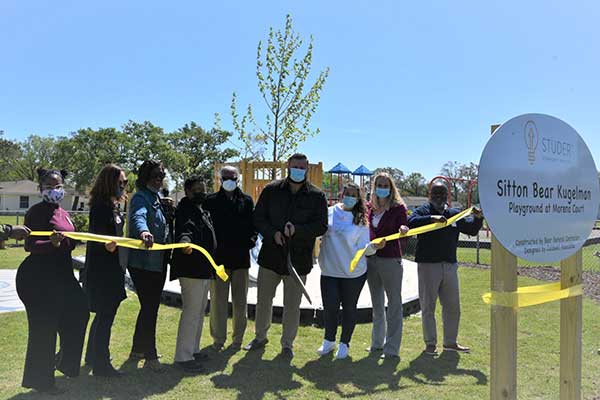
MPS Playgrounds have been installed at the Bodacious Brew Driver-Thru and in Moreno Court housing complex. These play spaces are built primarily with natural materials all designed to build gross and fine motor skills. They are landscaped with plants and trees that are non-toxic, attractive to butterflies and fuel a child’s connection with the natural world. That’s something research also shows is an important component of healthy brain development.
MPS Decals are a series of colorful, fun decals that can be installed in parks, playgrounds and other public spaces. These designs will reinforce concepts including counting, letter naming, shape and color identification. They’ve been placed on the steps at Blue Wahoos Stadium so that families can count and learn together. They’ve also been placed at parks across the community.
Early Learning Initiatives
An Early Learning City is a community that gives parents the tools, advice, and support they need to help their children be ready for kindergarten. From healthcare to business, everyone has a part to play.

Pensacola Basics
Partners fueling the 5 Basics of health early brain development.
Donors
Supporters who keep our work alive and growing.
Volunteer
How you can join our volunteer corps.
Support Us
Become a contributor to our Early Learning Program.
University of Chicago Partnership
Pensacola moms spent nearly two years on the front lines of research to help change the trajectory of young children from the very first days of life.
The research was part of a partnership between the Studer Community Institute and the TMW Center for Early Learning and Public Health at the University of Chicago. It tested whether a video lesson called TMW Newborn could be an effective learning tool for mothers.
The Newborn video lesson aims to boost what moms know about their child’s early brain development, and then increase their knowledge of the power that language has to build an infant’s brain.
The study showed that the video lesson can work.
From 2017-2019, the TMW Center partnered with six hospitals — 3 in the Chicago area and 3 in Escambia County — to test:
- If the video lesson impacted parent knowledge of infant language and cognitive development.
- If it impacted what parents knew about the importance of the universal newborn hearing screening.
- See how the video lesson could fit into the context of regular maternity care.
In all, more than 5,800 parents were offered the chance to be part of the study. Of them, 2,467 Florida women were offered participation in the study and 1,333 completed the study, which wrapped up in fall 2019.
“Crucially, this study has also informed the model for implementing the 3Ts Newborn intervention in the context of regular care, which is critical in achieving population-level changes in young children’s language development outcomes,” the final study reads.
In TMW Newborn, moms are presented with a survey on an iPad. It asks them questions about how babies’ brains develop and how they learn and process language. Moms are then shown a video that highlights some key teaching points about how parents talk and interaction influences a child’s brain development.
Then moms are asked the same questions again to try to see what they learned from the video.
The video is in four versions: a short version (about 7 minutes), a long version (about 14 minutes), a short version with questions that pop up to interrupt the video (parents must answer for the video to continue playing), and a long version with the interstitial questions.
The findings so far:
- Moms from both low- and high-socioeconomic status groups increased their knowledge about brain and language development.
- The video with interstitial questions helped moms with a lower educational attainment level learn more than the video without questions. The interstitial questions had no impact on the learning gains made by moms with a 4-year degree or higher.
- No significant difference in knowledge gains between the long and short versions of the videos.
- It also shows, the study authors say, that such an intervention can be made part of routine postpartum care by healthcare professionals — and it will be successful.
The TMW team presented a poster at the Society for Research in Child Development conference in Baltimore in March 2019, based on preliminary analysis of the moms who were part of the group.
The findings — of which Pensacola-area moms were an instrumental part — will be used in the TMW Center’s next project: a five-year, $2.5 million communitywide demonstration project in collaboration with the Children’s Services Council of Palm Beach County, Florida. The goal of that project is to reach 10,000 families with young children over the duration of the project.